Whole-House Renovation Budgeting in 2026: Where to Spend First
Embarking on a complete home renovation in the Netherlands is a major undertaking – financially, emotionally, and logistically. With material prices stabilising after recent volatility and stricter energy regulations on the horizon, 2026 demands a sharper budgeting strategy than ever before. Dutch homeowners must allocate every euro wisely, ensuring that the most critical upgrades are tackled first. This guide breaks down the renovation priorities that deliver the highest long‑term value, comfort, and compliance, while keeping your whole-house renovation budget under control.
Understanding Renovation Costs in 2026
A typical total renovation in the Netherlands now costs between €1,500 and €2,800 per square metre, depending on home type and finish level. The table below gives an overview of average per‑square‑metre costs for different dwelling types in 2026. These figures include labour, materials, and VAT, and assume a full strip‑out and rebuild, from energy envelope to final paintwork.
| Dwelling Type | Budget Renovation (per m²) | High‑End Renovation (per m²) |
|---|---|---|
| Rijtjeshuis (terraced house) | €1,500 – €1,900 | €2,000 – €2,400 |
| Twee‑onder‑een‑kap (semi‑detached) | €1,600 – €2,100 | €2,200 – €2,600 |
| Vrijstaande woning (detached) | €1,800 – €2,300 | €2,400 – €2,800 |
| Appartement (apartment) | €1,200 – €1,600 | €1,700 – €2,200 |
Even small cost overruns can derail the entire project if you don’t sequence the work correctly. Smart spending starts by protecting the building’s envelope and core systems, then moves inward to finishes. Below you’ll find the four essential spending phases, ranked from the most to the least critical, along with detailed cost guidance for Dutch homeowners.
Priority 1: Energy Efficiency and Insulation Upgrades
In the Netherlands, where gas prices remain high and the government pushes for fossil‑free homes by 2050, an energy upgrade budget is no longer optional – it is the foundation of any whole‑house renovation. Investing here first cuts monthly energy bills from day one and immediately raises the property’s Energielabel, which directly correlates with resale value. The Standaard voor woningisolatie (standard for home insulation) will soon mandate minimum insulation levels for older homes, making pre‑emptive upgrades even smarter in 2026.
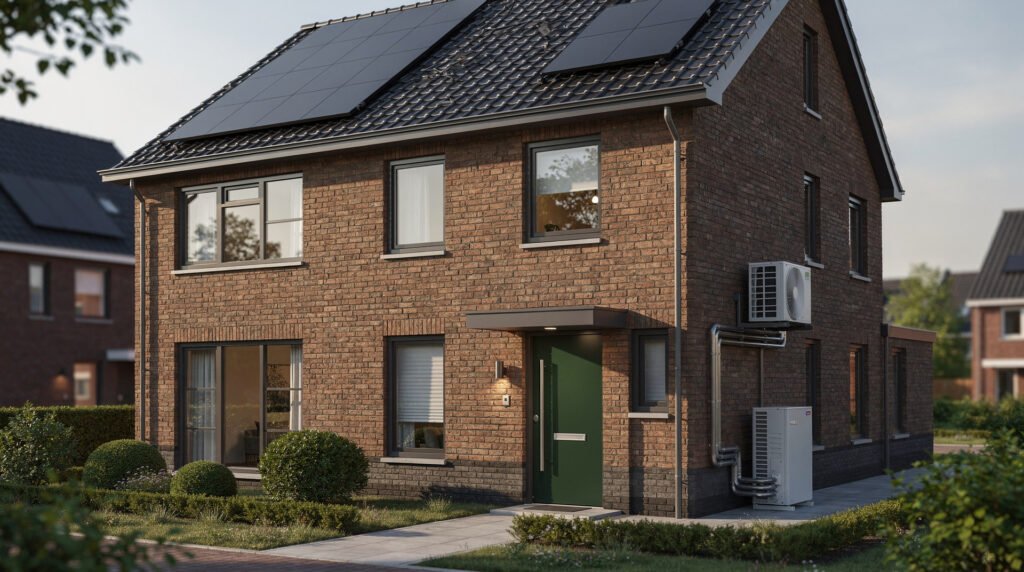
Allocate 35–45% of your total budget to the building envelope and energy‑generating systems. This includes roof, cavity wall, and floor insulation, triple or HR++ glazing, a heat pump, and optionally solar panels. The table below lists typical 2026 costs for these items in a medium‑sized rijtjeshuis (around 120 m²).
| Energy Measure | Average Cost (2026) | Payback Period (approx.) |
|---|---|---|
| Roof insulation (14–16 cm PIR) | €70 – €100 per m² | 3–5 years |
| Cavity wall insulation (existing cavity) | €25 – €40 per m² | 2–4 years |
| Floor insulation (crawl space) | €30 – €55 per m² | 4–6 years |
| HR++ glass (including frames where needed) | €200 – €350 per m² window | 6–10 years |
| All‑electric air‑to‑water heat pump | €10,000 – €16,000 (after ISDE subsidy) | 7–12 years |
| Solar panel set (10 panels, 4 kWp) | €4,500 – €6,500 (incl. BTW‑teruggave) | 4–5 years |
Important: Always start with insulation before sizing a heat pump. A well‑insulated home may require a smaller, cheaper pump and reduces running costs permanently. For Dutch homeowners, the ISDE subsidy remains the primary financial lever – you can claim up to €2,700 for heat pumps and often 30% of insulation measures when combined. Check your gemeente’s website in early 2026 for local subsidies, as many municipalities add extra contributions for zero‑on‑de‑meter projects.
Priority 2: Structural Integrity and Safety
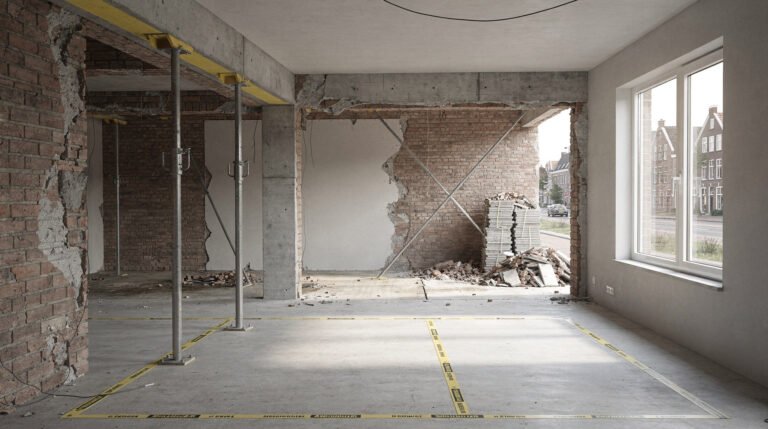
Once the home is weather‑tight and thermally efficient, the next euro must go into anything that holds the house up or keeps you safe. This phase addresses the skeleton of the dwelling: foundation, load‑bearing walls, roof structure, electrical wiring, and plumbing. Skimping here leads to costly emergency repairs later, often when walls are already closed.
Set aside 20–25% of your budget for structural and system upgrades. In older Dutch homes, especially those built before 1970, you might encounter funderingsproblemen (foundation problems) due to wooden piles rotting or settling. The table below shows the most common big‑ticket items and their 2026 price ranges.
| Structural/Safety Item | Cost Range (2026) | Key Indicator |
|---|---|---|
| Foundation repair (per strekkende meter) | €1,000 – €2,500 | Cracked walls, sloping floors |
| Full roof replacement (incl. structure, tiles) | €180 – €300 per m² | Leaks, sagging, moss growth |
| Complete rewiring (120 m² house) | €8,000 – €14,000 | Old fabric‑coated wires, no earth leakage |
| Central heating pipe replacement | €4,000 – €7,000 | Corroded steel pipes, frequent leaks |
| Asbestos removal (typical rijtjeshuis) | €3,500 – €8,000+ | Corrugated roof sheets, old vinyl floor |
Sequencing tip: Rough plumbing and electrical work must be completed before insulation and plasterboard are installed. Therefore, schedule your electrician and loodgieter immediately after the structural framer finishes. Running new leidingen while the walls are open saves thousands in rework. If you discover foundation issues during the energy‑upgrade phase (e.g., when insulating the floor), pause everything until a specialist assesses the situation. Addressing fundering first prevents you from covering up a growing problem.
Priority 3: Core Living Spaces – Kitchen and Bathroom
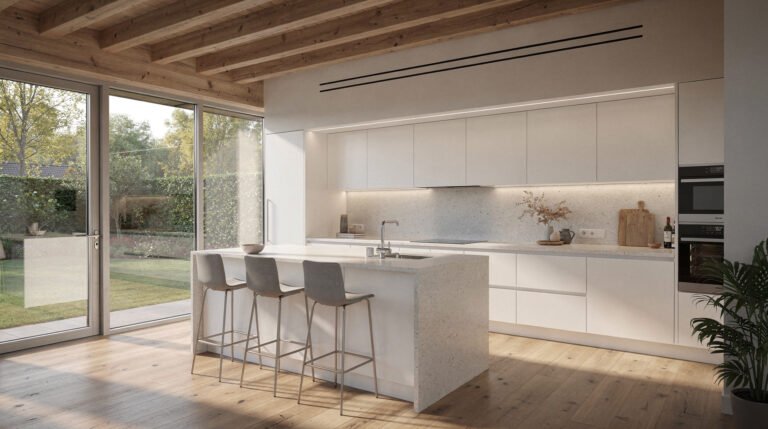
With the house stable and efficient, you can now create functional, enjoyable living spaces. The kitchen and bathroom are the most utility‑intensive rooms and traditionally offer the highest return on investment when done well. They also require careful coordination of water, gas, electricity, and ventilation – all already prepared if you’ve followed the earlier phases.
Allocate 20–30% of the renovation costs 2026 to these two wet spaces. In 2026, Dutch trends lean towards durable, low‑maintenance materials such as sintered stone worktops, induction cooking (in line with the gas‑free transition), and walk‑in showers with infrared heating panels. The following table gives realistic installed costs for a mid‑range finish (no luxury brands, but solid quality).
| Room | Mid‑Range Budget | What’s Included |
|---|---|---|
| Keuken (kitchen, 6–8 m²) | €16,000 – €28,000 | Kitchen unit setup, composite worktop, induction hob, oven, dishwasher, tap, tiling, plumbing, electrics |
| Badkamer (bathroom, 5–7 m²) | €10,000 – €18,000 | Walk‑in shower, wall‑hung toilet, vanity, heated mirror, floor and wall tiles, plumbing, mechanical ventilation |
Best practice: Choose a waterproof, uitgevlakt system for bathroom walls before tiling. For kitchens, invest in soft‑close drawers and a Quooker or similar boiling‑water tap if budget allows; Dutch families appreciate the energy saving compared to repeatedly boiling a kettle. Always hire a specialist keuken‑ en badkamerinstallateur rather than a general aannemer for the final fitting, as mistakes here are hard to correct after tiling.
Priority 4: Interior Finishes and Aesthetic Upgrades
The final phase is what you see and touch every day: flooring, wall finishes, interior doors, skirting boards, and paint. While these elements define the character of your home, they should never be rushed ahead of the critical path. A newly painted wall will crack if the foundation is still settling, and a beautiful oak floor will warp if the insulation beneath hasn’t been sealed against moisture.
Reserve 10–15% of your whole‑house renovation budget for finishes. One advantage of postponing these to the end is that you can adjust the aesthetics based on current trends and even reuse some items if your budget tightens after unforeseen structural work.
| Finish Item | Cost per Unit (2026) |
|---|---|
| Laminate or PVC floor (incl. onderlaag, plinten) | €30 – €65 per m² |
| Zwevende parket (engineered wood, glued) | €70 – €120 per m² |
| Painting walls & ceilings (per room, incl. labour) | €600 – €1,200 per room |
| Interior door set (door + frame + hinges + fitting) | €350 – €650 per door |
Smart approach: If you’re on a tight budget, use decent‑quality PVC planken in high‑traffic zones and paint the upper floor rooms yourself. Dutch building markets offer professional spachtelputz and beton ciré kits that can give a high‑end look without the high‑end price. Save bold design choices for easily changeable items – wallpaper, curtains, lighting – rather than permanent tiling. This keeps the home adaptable for future owners and reduces regret costs.
Contingency, Permits, and Professional Fees
No matter how thorough your planning, unexpected discoveries during a total renovation are the rule in the Netherlands. Hidden asbestos, corroded standleidingen in apartments, or a meterkast that no longer meets current NEN 1010 standards can blow a hole in your budget. Always earmark an extra 10–15% of the total project sum purely for unforeseen costs. For a rijtjeshuis renovation costing €200,000, that means keeping €20,000–€30,000 in reserve.
Beyond the building work itself, factor in the following often‑overlooked costs:
- Omgevingsvergunning (environmental permit): Required for structural changes, extensions, or altering a monument. Leges (municipality fees) typically run €500–€3,000 depending on project size and locale.
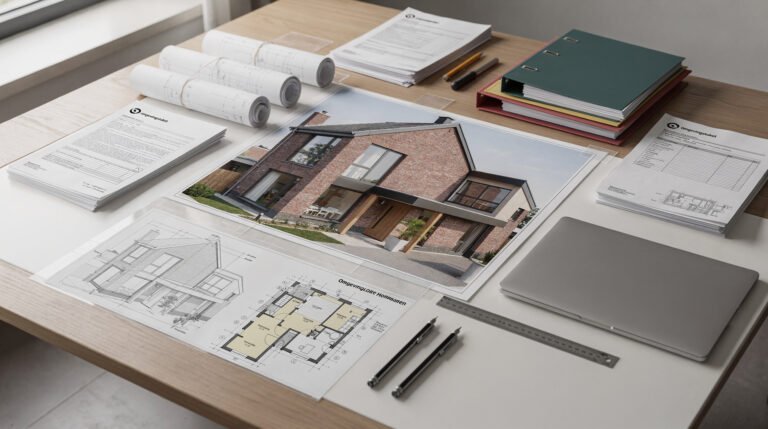
- Architect or bouwkundig adviseur: PlanBouwen or architectural drawings for the vergunning may cost between €2,500 and €6,000. This is not an area to cut corners; a good plan speeds up the vergunning process and avoids rejections.
- Wet kwaliteitsborging (Wkb): As of 2025/2026, the quality assurance law may apply to your renovation if it involves structural works and you use a professional builder. This requires an independent quality inspector, adding approximately 1–2% of the construction sum.
- Temporary relocation: If the house becomes uninhabitable, factor in 3–6 months of alternative housing (e.g., €1000–€2000 per month for a small apartment). This is often the biggest hidden expense in total renovations.
Practical Tips for Budgeting Your Renovation in the Netherlands
Applying the right financial tactics ensures that your renovation priorities remain on track and you don’t overspend on lower‑impact items. Below are actionable recommendations for Dutch homeowners starting in 2026.
- Get three detailed offertes: Request itemised quotes from at least three different aannemers or specialist contractors. Compare not only the total but also the post‑onvoorzien (unforeseen) clauses and material specifications. In 2026, genuine specialists will include a specific post for energy measures and may mention the ISDE procedure.
- Check subsidy deadlines early: The ISDE and SEEH subsidies often require that you apply before a certain milestone, or that the work is carried out by a recognised installer. Plan your energy upgrade budget accordingly, and submit the aanvraag as soon as the contract is signed. Some gemeentes also offer rent‑free loans (duurzaamheidslening) to cover the up‑front cost.
- Sequence the work ruthlessly: Follow the order outlined above – envelope, structure, wet rooms, finishes. Never install a kitchen before insulating the adjacent external wall, and never plaster before all leidingen are in place. A good aannemer will insist on this, but if you are self‑managing, a Gannt chart of tasks prevents chaotic overlaps.
- Choose timeless, locally available materials: Imported niche materials often carry long lead times and high shipping costs. Dutch suppliers like Hornbach, Bouwmaat, and local tegelhandels offer reliable stock. For insulation, stick to well‑tested products like PIR or glaswol with KOMO certification – they meet the Nederlandse normen and are readily available.
- Monitor the VAT (BTW) rate on renovation: For homes older than two years, the lower 9% BTW may apply to the labour portion of the renovation. Ensure your invoices clearly split materials and labour to benefit from this. This can save you up to 12% on the total bill and is often overlooked.
Conclusion: Spend First Where It Counts Long‑Term
A whole‑house renovation in 2026 is a balancing act between immediate comfort and sound investment. By directing the bulk of your whole-house renovation budget first towards energy efficiency and structural integrity, you protect your home against future market shocks and regulatory changes. The kitchen and bathrooms come next, creating daily usability, while aesthetic finishes can wait until the very end. Always keep a robust contingency fund and tap into the subsidy landscape unique to Dutch homeowners. With this priority‑based approach, your renovation will not only look beautiful but will also be comfortable, cost‑effective to run, and resilient for decades to come.