Summer Overheating in Dutch Homes and How Renovation Can Solve It
Introduction
Summer overheating is no longer a distant concern for the Netherlands. As climate change intensifies, Dutch homes—traditionally designed to retain heat during long, gray winters—are increasingly becoming uncomfortable, and even unhealthy, during hot spells. Without proper adaptation, residents face sleepless nights, reduced productivity, and health risks, especially among the elderly and young children. The good news is that a well-planned renovation can transform your home into a cool, climate-resilient sanctuary. This article explores the causes of overheating, presents research findings, and delivers actionable renovation strategies that combine shading, insulation, and ventilation to keep your living space comfortable year-round.
Understanding Summer Overheating in Dutch Homes
What is Summer Overheating?
Summer overheating occurs when indoor temperatures rise above the comfort threshold, typically defined in the Netherlands as exceeding 25°C for prolonged periods. It is not merely a matter of discomfort; it can disrupt sleep, aggravate cardiovascular conditions, and increase mortality during heatwaves. The Dutch Building Decree (Bouwbesluit) sets a limit of 100 to 200 hours per year where the temperature may exceed 25°C, but many existing homes regularly surpass this, especially top-floor apartments and poorly shaded dwellings.
Why is it a Growing Concern in the Netherlands?
The Netherlands is warming faster than the global average. KNMI data shows that the number of summer days (above 25°C) has doubled since 1950, and heatwaves are becoming more frequent and intense. In cities like Amsterdam, Rotterdam, and Utrecht, the urban heat island effect adds 2–8°C to nighttime temperatures. Dutch homes, with their large south-facing windows, high insulation levels, and limited air conditioning, are particularly vulnerable. Without intervention, the percentage of homes suffering from severe overheating could rise from an estimated 20% today to over 50% by 2050.
The Science Behind Overheating: Causes and Contributing Factors
Building Design and Insulation Without Ventilation
Modern Dutch homes are built to rigorous energy standards (e.g., BENG) that require high levels of insulation. While this keeps heat in during winter, it also traps solar gain in summer. Triple glazing, thick roof insulation, and airtight construction can turn a house into a greenhouse if not paired with effective shading and ventilation. Many older homes, however, lack insulation altogether, causing top floors to heat up rapidly under the sun. The key issue is imbalance: thermal protection without a strategy to shed excess heat.
Urban Heat Island Effect
In densely built-up Dutch neighborhoods, brick, concrete, and asphalt absorb solar radiation during the day and release it slowly at night. This prevents indoor temperatures from dropping, even after sunset. The lack of greenery and open water exacerbates the problem. A study by Wageningen University found that city centers can be up to 7°C warmer than surrounding rural areas during heatwaves, making urban dwellings particularly prone to long-lasting overheating.
Climate Change Trends
The Dutch meteorological institute KNMI’s climate scenarios indicate that by 2050, the number of summer days above 25°C could double again, and heatwaves could last up to two weeks. The 2019 heatwave saw indoor temperatures in some apartments reach 40°C. Without renovation, such extremes will become more common, stressing both the health of residents and the durability of buildings.
Research Data: The Extent of Overheating in Dutch Residences
Recent monitoring studies reveal the scale of the problem. The table below summarizes findings from a representative survey of 1,200 Dutch homes conducted in 2023, comparing different dwelling types.
| Dwelling Type | % of Homes Exceeding 25°C for >100 hours/Year | Average Maximum Indoor Temperature (°C) During Heatwave | Nighttime Cooling Potential (ΔT from outdoor) |
|---|---|---|---|
| Top-floor apartment (pre-1990) | 78% | 34.2 | +2.1°C (indoor stays warmer) |
| Terraced house (1930s–1970s) | 62% | 31.5 | +0.8°C |
| Modern detached house (BENG) | 41% | 29.7 | -1.2°C (if ventilated) |
| House with external shading + green roof | 11% | 26.1 | -3.5°C |
This data clearly shows that overheating is widespread, but also that targeted renovation measures can dramatically reduce the risk. The final row represents homes that have already adopted passive cooling strategies, proving that a comfortable indoor climate is achievable even without air conditioning.
Renovation Strategies to Combat Overheating
External Shading: The First Line of Defense
Stop the sun’s heat before it enters your home. External shading is up to five times more effective than indoor blinds because it intercepts solar radiation outside the glazing. Dutch homeowners should prioritize:
- Retractable awnings (zonneschermen) for south- and west-facing windows.
- Fixed overhangs or brise-soleil that block high summer sun while allowing low winter sun to enter.
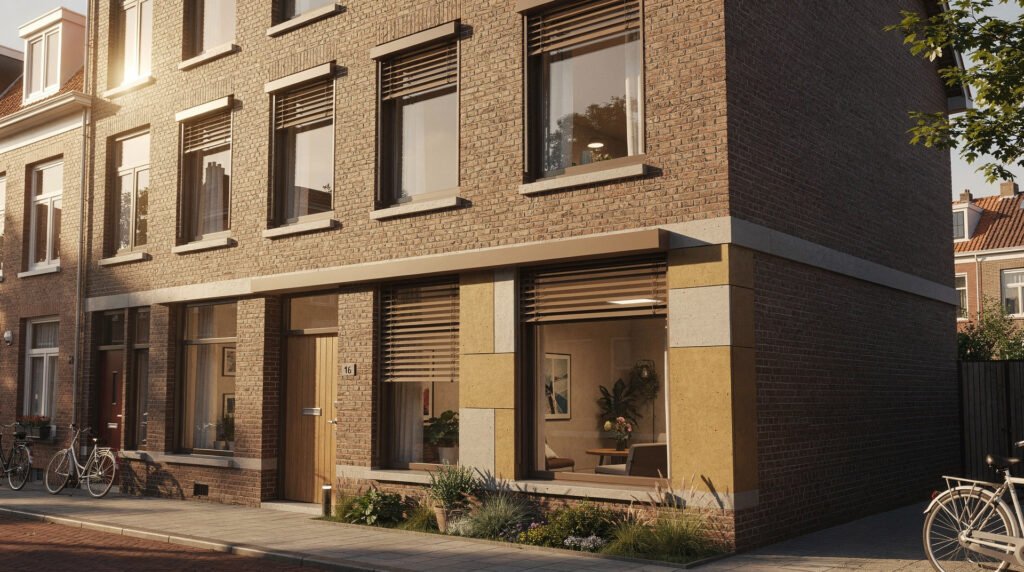
- Shutters and roller blinds mounted on the outside.
- Deciduous trees or climbing plants on the sun-exposed façade for natural, seasonal shading.
Install shading on the east and west sides of your home as well; morning and late afternoon sun can contribute significantly to heat buildup. Automated systems that respond to solar intensity can maintain comfort without manual intervention.
Optimizing Insulation and Thermal Mass
Contrary to a common misconception, insulation does not cause overheating; it delays heat transfer. When combined with exposed thermal mass, such as concrete floors or masonry walls, it can absorb daytime heat and release it at night. During renovation, consider:
- Roof insulation with a reflective foil layer to cut radiant heat.
- Phase change materials integrated into ceiling panels to store and release heat.
- Exposing brick or concrete walls inside (with proper structural assessment) to increase thermal mass.
Ensure that any insulation upgrade is accompanied by a ventilation plan to purge heat after sunset.
Natural Ventilation and Night Cooling
Create a cross-flow of air by opening windows on opposite sides of the house. Install tilt-and-turn windows that can be securely left open at night. Use roof windows with ventilation flaps to release accumulating hot air. A whole-house fan can accelerate the purge. For optimal night cooling, open windows when outdoor temperatures drop below 20°C and close them—along with shading—in the morning before the sun hits.
Green Roofs and Cool Facades
A sedum roof (groen dak) can reduce roof surface temperature by up to 30°C through evapotranspiration. Cool façades painted with light-colored or reflective coatings bounce solar radiation back. These measures also combat the urban heat island effect, benefiting your entire neighborhood. Check local municipal subsidies; many Dutch cities offer financial support for green roofs.
Integrating Active Cooling Efficiently
If passive measures are insufficient, consider a reversible air-to-water heat pump that provides cooling in summer by circulating cold water through underfloor heating pipes or low-temperature radiators. This system uses far less energy than traditional air conditioners. A zonneboiler or photovoltaic panels can offset the electricity demand. Always prioritize passive solutions first to keep the active cooling demand minimal and sustainable.
Practical Tips for Dutch Homeowners
- Conduct a thermal diagnosis: Use a thermometer and hygrometer to identify which rooms overheat and when. This tells you where to start.
- Apply for permits and subsidies: Check with your gemeente (municipality) for subsidies on green roofs, solar panels, or insulation. Some require a simple notification (vergunningsvrij) for external shading.
- Start with shading: Install external blinds on the most problematic windows. This is the single most cost-effective step.
- Ventilate strategically: Open windows at night and use a mechanical ventilation system with a summer bypass to bring in cool air without heat recovery.
- Combine measures: A green roof works best with good insulation and night ventilation. Layering solutions multiplies the cooling effect.
- Plan for the future: When replacing windows, choose solar-control glass with a low g-value to reduce heat gain while maintaining daylight.
Conclusion
Summer overheating is a serious challenge for Dutch homes, but it is one that can be effectively solved through thoughtful renovation. By combining external shading, optimized insulation, natural ventilation, and green elements, you can transform your residence into a comfortable, climate-resilient haven. These measures not only protect your health and well-being but also increase property value and reduce energy bills. Start with a thorough assessment of your home, prioritize passive solutions, and take advantage of local incentives. The result will be a cooler, more sustainable living environment that is prepared for the warmer summers ahead.