Energy Label Upgrade Roadmap for Dutch Homes Starting at D, E or F
An energy label is a calculated description of a Dutch home, not a promise about a particular renovation package. The residential scale runs from G to A++++ and is calculated under NTA 8800. A home with label D, E or F may need a different sequence of work from another home with the same letter. The useful starting point is the existing label and advisory information, followed by an assessment of the actual envelope and installations.
What the label represents
A registered energy-performance adviser inspects the dwelling and registers the label in EP-online. The label uses building and installation data to calculate primary fossil energy use. It is not self-certified from a checklist. Household appliances and occupant behaviour are not the same as the data used for the label calculation, so a high bill or a low bill does not by itself determine the letter.
Review the current label, the date of registration and the advice supplied with it. Look for information about the roof, walls, floor, glazing, heating, hot water, ventilation and renewable systems. Then compare that record with the actual home. Previous alterations may not be reflected, and a visual inspection can reveal moisture, draughts or installation constraints that a general label summary cannot resolve.
Build a project-specific roadmap
Do not assign a fixed package to label D, E or F. Two homes with the same label can have different envelopes, heating systems and opportunities. One may need a roof or floor intervention first; another may have reasonable insulation but outdated installations or poor ventilation. The adviser and design team should establish the existing condition, the desired scope and the order in which measures can be executed.
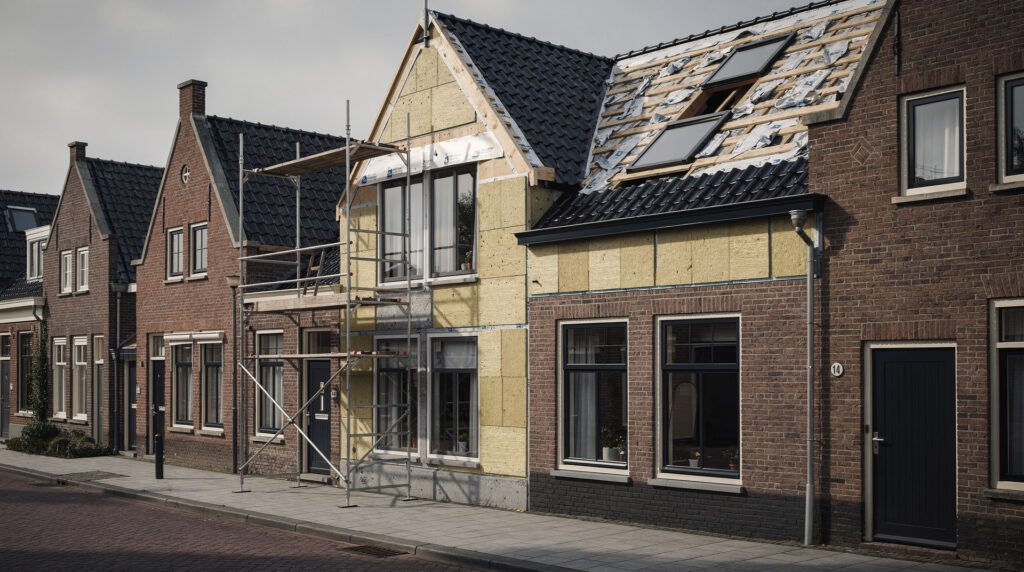
Practical sequencing often starts with the building envelope and moisture strategy, then coordinates windows, ventilation and heating. The exact order depends on the building. A renovation that changes the airtightness or insulation should account for ventilation. A heating replacement should be sized after the expected demand is understood, not selected solely because a label has a particular letter.
Use evidence before ordering work
- Read the official label and advisory information in EP-online.
- Inspect the roof, façade, floor, windows and services for their actual condition.
- Ask for product declarations and a project-specific design rather than universal savings claims.
- Check permits, Bbl requirements, moisture risks and ventilation before altering the envelope.
- Agree how the completed work will be documented for a new assessment.
The label can help prioritise a renovation, but it does not replace technical design. Obtain quotations that describe the complete build-up and installation, including junctions, controls and commissioning. Treat predicted improvement as a design outcome to be checked, not as an automatic result of buying a particular product.
Register the result after renovation
After renovation, a new registered assessment is required to obtain an updated official label. The adviser will inspect the completed measures and register the result in EP-online. Keep invoices, declarations, drawings and commissioning records so the assessment can verify what was actually installed.
A careful route from the existing label to a project-specific design gives owners of D, E and F homes a useful basis for decisions. The target letter may matter, but the quality of the building, installations, moisture control and ventilation matter just as much.
Official sources and next checks
Rules and product information can change. Before ordering or applying, check the sources that apply to the address and proposed work.