2026 ISDE Ventilation Subsidy and When It Fits a Full Renovation
For Dutch homeowners planning to breathe new life into an outdated property, a full renovation is not just about fresh walls and modern kitchens. It opens a unique window to tackle your home’s energy performance at its very core, including the often-overlooked ventilation system. In 2026, the ISDE (Investeringssubsidie duurzame energie en energiebesparing) continues to provide significant financial support for mechanical ventilation with heat recovery, turning what was once a luxury into a highly attainable standard. But when exactly does investing in a WTW unit make sense, and how can you align it perfectly with a complete home overhaul? This article delivers a deep dive into the 2026 ISDE ventilation subsidy, the technical synergy between a full renovation and balanced ventilation, and the practical steps to create a healthy, energy-efficient home that meets the Netherlands’ bold sustainability targets.
Understanding the Basics: ISDE, Full Renovations, and Heat Recovery Ventilation
What Exactly Is the ISDE Subsidy?
The ISDE is the Dutch government’s main instrument to stimulate renewable energy and energy-saving measures in existing homes. Originally focused on heat pumps and solar boilers, the scheme was broadened to include insulation and ventilation with heat recovery. For homeowners, this means a direct financial contribution towards the purchase and professional installation of a high‑efficiency balanced ventilation system. The subsidy works as a fixed amount per installed unit rather than a percentage of the investment, making the budgeting predictable. To claim it, the installation must be performed by a recognised professional after the application has been approved, and the system must meet specific technical standards set by the RVO (Rijksdienst voor Ondernemend Nederland).
Defining a Full Renovation in the Dutch Context
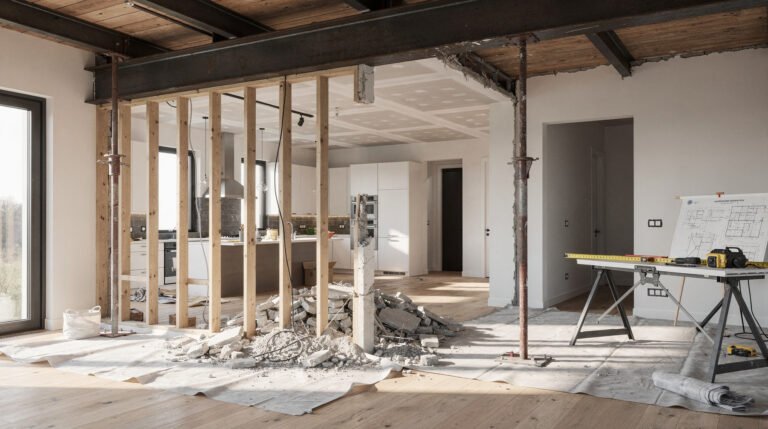
In the Netherlands, a “full renovation” (volledige renovatie) goes far beyond cosmetic updates. It typically involves stripping a dwelling back to its structural shell, replacing all building services, upgrading the entire thermal envelope, and often reconfiguring the floor plan. Works can include full roof, floor, and facade insulation, triple‑glazing replacement, a new central heating or heat pump system, and, critically, making the house airtight. This level of intervention creates the perfect construction phase to integrate a ventilation system with ductwork that would otherwise be extremely disruptive to retrofit later. When you are already opening up floors and ceilings, routing air distribution channels becomes a marginal extra effort, saving substantial costs compared to a later stand‑alone project.
Ventilation with Heat Recovery: How a WTW Unit Works
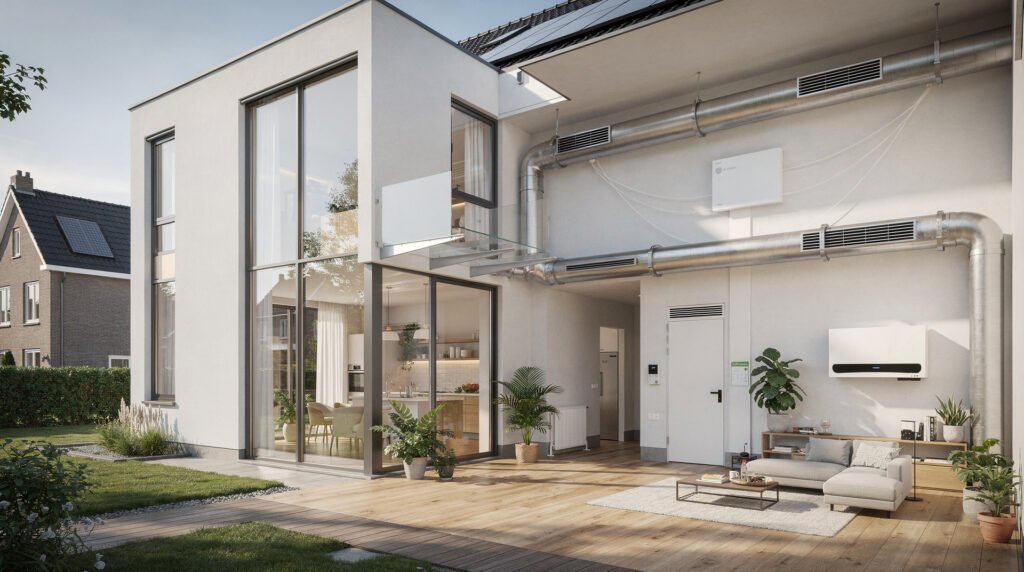
A balanced ventilation system with heat recovery, often referred to as a WTW (warmteterugwinning) unit, simultaneously extracts stale, humid air from kitchens, bathrooms, and toilets while supplying fresh, filtered outdoor air to living rooms and bedrooms. The two air streams pass through a heat exchanger without mixing. In winter, the outgoing warm air pre-heats the incoming cold air, recovering up to 95% of the heat that would otherwise be lost. This drastically lowers the demand for space heating and ensures a constant, draught‑free indoor climate. A high‑quality WTW system also includes fine‑particle filters, contributing to a healthier home by reducing pollen, dust, and outdoor pollutants – a significant advantage in urban areas and for allergy sufferers.
ISDE Ventilation Subsidy 2026: Amounts and Key Conditions
The Dutch government updates the ISDE budget and specific amounts annually. Based on the stable policy trend, the 2026 subsidy for ventilation measures will remain attractive. Below you will find indicative figures for the most common configurations. Please note that official amounts are published by RVO each January, so always verify the latest values before applying.
| Ventilation System Type | Minimum Living Area Served | Approximate Subsidy (2026) | Technical Requirement |
|---|---|---|---|
| Central balanced ventilation (WTW‑unit) with heat recovery | ≥ 50 m² | € 1.250 | Heat recovery efficiency ≥ 85% (EN 13141‑7) |
| Central balanced ventilation (WTW‑unit) smaller capacity | 20 – 49 m² | € 750 | Same efficiency requirement |
| Decentralised WTW unit (per single‑room unit) | Per room | € 400 (max. 2 units per home) | Efficiency ≥ 85%; CO₂‑controlled allowed |
To qualify, you must be the owner‑occupier of an existing dwelling (built at least two years ago) in the Netherlands. The installation must be carried out by a construction or installation company registered with the KvK. As soon as the system is operational, you have twelve months to file your subsidy claim through the RVO portal. Keep the invoice and, if applicable, the measurement report confirming energy performance. If you combine several energy‑saving measures in one full renovation, you can apply for multiple ISDE components within the same application – a key strategy to maximise your subsidy return.
When a Full Renovation Is the Ideal Moment for ISDE Ventilation
Seamless Integration of Ductwork
The single biggest barrier to retrofitting a central WTW system in an existing home is the need for a network of air ducts. In a full renovation where ceilings are being lowered, floors are being renewed, and non‑load‑bearing walls are being moved, the contractor can plan duct routes exactly where they are least intrusive. A well‑designed layout places rigid smooth‑wall ducts inside service shafts, false ceilings in hallways, or within the insulation layer of a new screed floor. This eliminates the later nightmare of surface‑mounted boxing and unsightly grilles. By tackling the ventilation infrastructure during the building shell upgrade, you achieve a clean, aesthetic finish and avoid duplicate labour costs that would be incurred if you installed the system months or years afterwards.
Reaching the Required Airtightness
A heat recovery ventilation system performs optimally only if the building envelope is sufficiently airtight. Otherwise, uncontrolled air leakage overrides the balance, leading to draughts and reduced heat recovery efficiency. A full renovation gives you the chance to apply continuous air barriers – through liquid‑applied membranes, high‑performance tapes, and meticulous sealing around windows and service penetrations – that bring the specific air leakage rate (qv10) down to levels well below 1.0 dm³/s·m². This airtightness target is entirely achievable when you strip walls and roofs back to the structure. If you were doing only a partial renovation, such comprehensive sealing becomes much harder and often financially unviable.
Synergy with Insulation and Thermal Upgrades
The 2026 ISDE also subsidises insulation measures when at least two different insulation actions are taken. Imagine you are completing roof insulation to Rc 6.5, floor insulation to Rc 3.5, and facade insulation – all typical of a full renovation. By adding a ventilation system to the same project, you not only unlock the separate ventilation subsidy but also dramatically improve the overall energy label. A well‑insulated, airtight home equipped with a WTW can eliminate the need for conventional radiators entirely, allowing a low‑temperature heat pump to cover both heating and domestic hot water. The ventilation subsidy thus becomes one piece of a larger puzzle that can push your home from a disappointing energy label G or F straight to A+++, slashing monthly energy bills and raising property value.
When a Full Renovation Might Not Be the Right Fit
If your project is limited – for instance, you are only remodelling the kitchen and bathroom without tackling the thermal shell – a central WTW system might be overkill. In such cases, decentralised per‑room units can still improve air quality and qualify for a smaller ISDE subsidy without major ducting. Likewise, if your home is a monument with restrictions that prevent altering the building’s appearance or internal structure, integrating ducts may be impossible. Always consult a Bouwfysica advisor early in your design stage to determine whether the structural changes you plan are compatible with a balanced ventilation strategy.
Step‑by‑Step: Claiming the ISDE Ventilation Subsidy in a Full Renovation
- Engage a qualified energy advisor or architect. During the design of your full renovation, request a “maatwerkadvies” that includes ventilation calculations according to NEN 1087. This ensures your chosen unit is correctly sized and that the duct layout meets legal ventilation requirements (Bouwbesluit).
- Select a certified WTW unit and installer. Verify that the equipment you buy is on the RVO “Maatregellijst” and has a documented heat recovery efficiency of at least 85%. Your installer should be a registered company with expertise in balanced ventilation systems.
- Apply for the ISDE subsidy before installation. Through the RVO portal (digitaal loket), submit your application indicating the ventilation measure. You can also include other measures like insulation and a heat pump in the same digital form. Save the confirmation number.
- Time the installation within your renovation schedule. The physical mounting of the WTW unit and ducts must happen after the subsidy application is accepted. Coordinate with your contractor to install the ductwork while walls and ceilings are open, and fit the unit itself once the house is dust‑free.
- Compile the final documentation. After completion, gather the paid invoice, any commissioning report, and photos of the installation. If you combined multiple measures, the invoice can be a single document covering all works.
- File the subsidy claim within twelve months. Log back into RVO’s portal, attach your proof, and submit the final claim. The subsidy will be paid into your bank account within a few weeks.
Practical Tips to Get the Most from Your Full Renovation Ventilation Project
Plan Duct Routing Early and Involve All Trades
On paper, a straight ventilation duct looks trivial. In reality, it competes for space with electrical cables, water pipes, and structural beams. During the design phase, hold a coordination meeting with your architect, installer, and builder. Use 3D building models if possible to resolve clashes. Keep the main air distribution box centrally located – a utility room or a dedicated space in the attic – and minimise duct length to the furthest rooms. Remember that rigid, smooth‑walled metal ducts cause far less resistance than flexible plastic, improving energy efficiency and reducing fan noise.
Specify an Enthalpic Exchanger for Optimal Comfort
A standard WTW unit recovers sensible heat only. For a home that will be extremely airtight after renovation, consider a unit with an enthalpy exchanger that also recovers moisture. This prevents the indoor air from becoming too dry in winter, maintaining a relative humidity around 40–60%. It is a small upgrade that greatly enhances comfort without requiring extra energy.
Integrate CO₂‑ and Humidity‑Controlled Boosters
Modern WTW systems can be equipped with sensors in kitchens and bathrooms that automatically increase the ventilation rate when humidity or CO₂ levels rise. In a full renovation, the wiring for these sensors is easy to install behind plasterboard. This “demand‑controlled” ventilation reduces energy use by avoiding unnecessary high‑speed operation and is often a prerequisite for achieving a BENG‑compliant result, which may future‑proof your home against further regulatory tightening.
Don’t Overlook Filter Maintenance Access
A common post‑renovation frustration is discovering that the WTW unit’s filters are practically inaccessible because a built‑in wardrobe blocks the service hatch. Ensure your designer includes a clear, permanent access panel. Write into the builder’s contract that filters must be replaceable without dismantling furniture or structural finishes.
Combining ISDE Ventilation with Other Subsidies for a Complete Energy Overhaul
A full renovation is an investment, but the Dutch government offers a layered subsidy landscape that you can stack. Under the same ISDE application you can claim for:
- Insulation measures: Roof, floor, facade, or cavity wall insulation – at least two types must be installed to qualify. Each has its own fixed amount.
- High‑efficiency glazing: Triple‑glazed HR++ or HR+++ windows are eligible when combined with frame replacement.
- Heat pump: Air‑to‑water, ground‑source, or hybrid heat pumps attract substantial subsidies, often up to a few thousand euros.
- Solar water heater: Though less common, it can be part of the mix.
For example, a typical full renovation in a 1930s terraced house might involve roof insulation, floor insulation, cavity wall insulation, new triple‑glazing, an air‑to‑water heat pump, and a central WTW unit. The total ISDE contribution could exceed € 7,000 – a sum that comfortably offsets the extra cost of the ventilation system. Moreover, the integrated approach pushes the home’s energy label to A++ or A+++, which often unlocks lower mortgage interest rates (via the Energiebespaarhypotheek) and increases property value by 5–10%. Always consult RVO’s latest “Subsidiewijzer” to see which combinations are allowed and to ensure you meet the “two‑insulation‑measure” rule for the insulation subsidy separately.
Healthy Home and Energy Efficiency: A Permanent Win‑Win
Beyond the euros and cents, ISDE ventilation in a full renovation brings a profound improvement in quality of life. Stale, moisture‑laden air that fosters mould and dust mites is systematically replaced with filtered outdoor air. No more condensation on bedroom windows in the morning, no more lingering cooking smells, and a marked reduction in asthma and allergy triggers. At the same time, because the heating demand drops dramatically, the house stays comfortably warm on far less energy – a direct defence against fluctuating gas prices. Dutch winters demand a home that is truly comfortable, and a balanced ventilation system ensures that comfort without the compromise of open‑window ventilation heat loss.
Conclusion
The 2026 ISDE ventilation subsidy offers Dutch homeowners a compelling financial incentive to adopt mechanical ventilation with heat recovery. When timed with a full renovation, this measure becomes not only affordable but technically flawless. The open‑wall stage eliminates the retrofitting challenges of duct installation, while simultaneous insulation and airtightness work guarantee the system performs at its rated efficiency. By applying for the ISDE subsidy alongside other renovation measures, you transform a major building project into a future‑proof, energy‑neutral home. Plan thoroughly, hire certified professionals, and use the subsidy structure to turn what was once a mere “renovatie” into an investment that pays back through lower bills, better health, and a significantly improved home value.