Understanding Passive House Standards for Dutch Homes
Passive House certification is a defined performance standard for buildings. It is not simply another name for a well-insulated home. For Dutch homeowners and renovation teams, that distinction matters: certification depends on calculated energy performance, airtightness and thermal comfort, followed by verification.
What the Passive House standard measures
The Passive House approach limits the energy a building needs for space heating and sets requirements for the building envelope and indoor conditions. Under the Classic certification route, the Passive House Institute criteria include a space-heating demand of no more than 15 kWh per square metre of treated floor area per year, or a heating load of no more than 10 W/m². These are performance criteria, not a shopping list of products.
Airtightness is another central requirement. When tested at 50 Pa, the building must reach no more than 0.6 air changes per hour for the Classic route. The result depends on the continuity of the air barrier and on careful detailing around windows, doors, junctions and service penetrations.
How the design principles work together
High-quality insulation reduces heat flow through the roof, walls and floor. Windows are selected and positioned as part of the overall energy design, taking account of daylight, solar gains, orientation and potential overheating. A compact form and reduced thermal bridging can further support the calculated performance.
Because the building is designed to be airtight, ventilation must be considered at the same time. A balanced ventilation system can supply fresh air to living spaces and remove stale air from wet rooms. The design must support indoor air quality and thermal comfort while fitting the calculated energy demand.
Certification is a calculation and verification process
Choosing insulation, windows or a heat-recovery unit does not guarantee Passive House certification. The complete project must be assessed against the applicable criteria. That process includes the energy-demand calculation, airtightness testing and verification of thermal comfort. The Passive House Institute’s certification route documents the project and checks whether the completed building meets the standard.
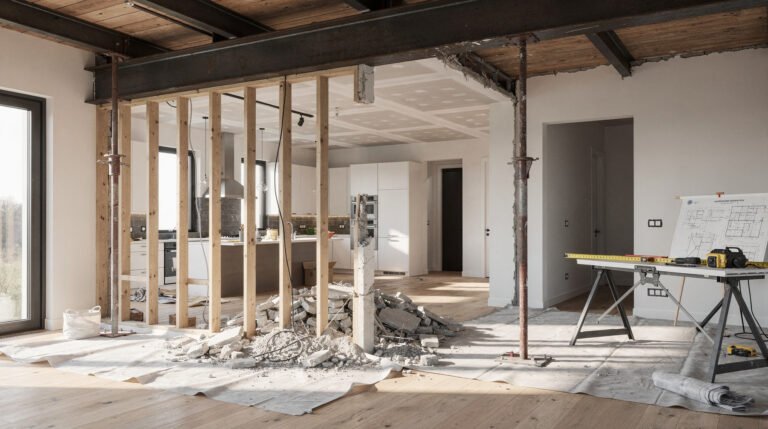
This is especially important for renovation work. Existing structures can contain irregular junctions, restricted floor-to-ceiling heights and details that are difficult to make continuous. A design team should identify those constraints early and test the proposed solutions rather than assuming that individual materials will deliver the required result.
Applying the approach to a Dutch renovation
Start with an assessment of the existing dwelling and a clear renovation brief. Map the roof, façade, floor, windows and junctions, then identify where the air barrier will run. Coordinate insulation thicknesses, window installation and service routes before construction begins. The airtight layer should remain continuous around penetrations and at connections between different building elements.
Plan testing into the programme. An airtightness test can reveal leakage while remedial work is still practical. The ventilation design should be commissioned and checked as part of the completed project, with attention to airflow, comfort and access for maintenance.
Passive House certification is separate from Dutch legal compliance. A renovation still has to meet the applicable Building Quality in the Built Environment Act (Bbl) requirements, and local permits may be needed. Those obligations do not disappear because a project is designed toward voluntary Passive House certification. Check the permit position and the relevant Bbl requirements with the municipality or a qualified professional before work starts.
What homeowners should ask the project team
- Which Passive House criteria apply to this project and which certification route is intended?
- How will the energy demand and thermal comfort be calculated?
- Where is the continuous air barrier, and how will it be tested at 50 Pa?
- How do the ventilation, window and insulation details work together?
- Which Dutch permits and Bbl requirements apply independently of certification?
A disciplined design, calculation and verification process gives a Dutch renovation a realistic path toward Passive House performance. The standard is achieved by the building as a whole, not by a single product or isolated improvement.
Official sources and next checks
Rules and product information can change. Before ordering or applying, check the sources that apply to the address and proposed work.